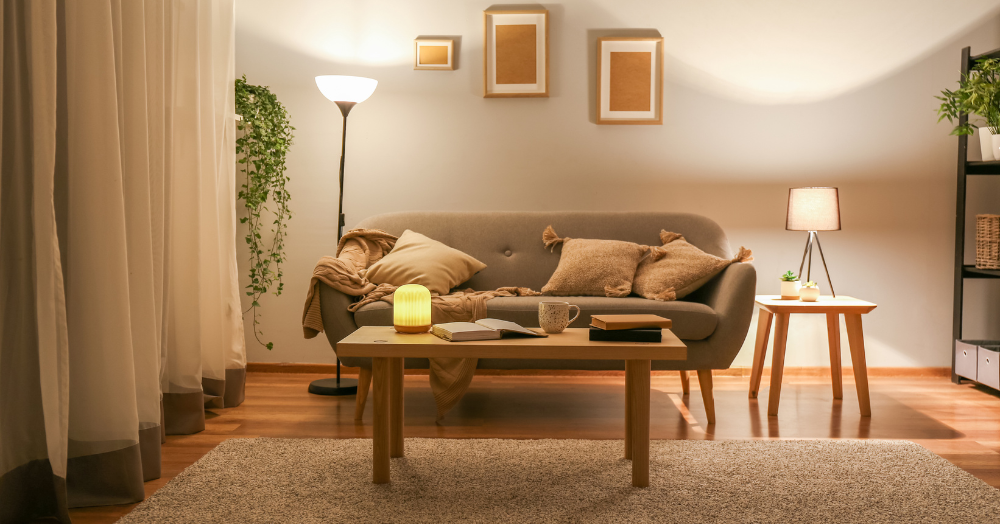
An illuminating look at little-known secrets to selling your home this winter.
As the nights draw in, lighting becomes an essential element in every home. Of course, we all like to get cosy and snuggle up on a chilly winter evening, but we don't want to spend the whole season in the dark. So, with skies getting dark around mid-afternoon, even the brightest of homes will no doubt start to put their lights on during the day because of the reduced natural light.
When selling a property, most buyers would say they want a light and bright home. The general consensus is the brighter the property, the better. We don't want to buy a dark and dingy house. We don't want to struggle to see as we prepare dinner each evening in a dark kitchen or give ourselves eye strain as we try to focus on the laptop screen while trying to work.
First impressions count, and if the first impression is that your home is dark, the viewers might be put off. Overall lighting can give the impression of more space, and accent lighting can add a sense of drama to a room. And, of course, you can always amp up the cosy vibes with fairy lights to give a space a certain ambience. Lighting significantly impacts the feeling of a room, so how can you use lighting to ensure that your home gives your viewers the best first impression, securing you a sale?
- Find light in the darkness - every home will have a darker room or two that most likely faces to the north. Illuminate these rooms with bright overhead lighting.
- Task lighting - Introduce lamps to the darker corners of rooms, either floor or table lamps, to the areas that would most benefit from increased lighting. Add wall lights to darker walls or a table lamp to a darker corner can make a huge difference to the energy and feel of a room.
- Which light? - It is not as simple as adding as many lights as possible; not all spaces need the highest wattage bulb. Generally, when lighting a workspace, you should opt for a natural lightbulb or a cool white light to replicate natural light as much as possible. However, layering this cooler light with a warm white bulb can add to the ambience of a home.
- Light the fires - During the winter, it is the perfect time to get fires and candles lit to add a lovely warm glow to living spaces. This will create a warming atmosphere for any prospective buyer who braves the dark nights and elements to come and view your property, and it is undoubtedly a welcome sight.
Good lighting is a subtle but highly effective way to give your viewers a positive experience when they view your home, and it will create a great first impression.
You will surely see plenty of interest if you can nail your lighting strategy as we move through the winter months.
For more information about selling your home or to book a valuation appointment with one of our experts, contact us today.