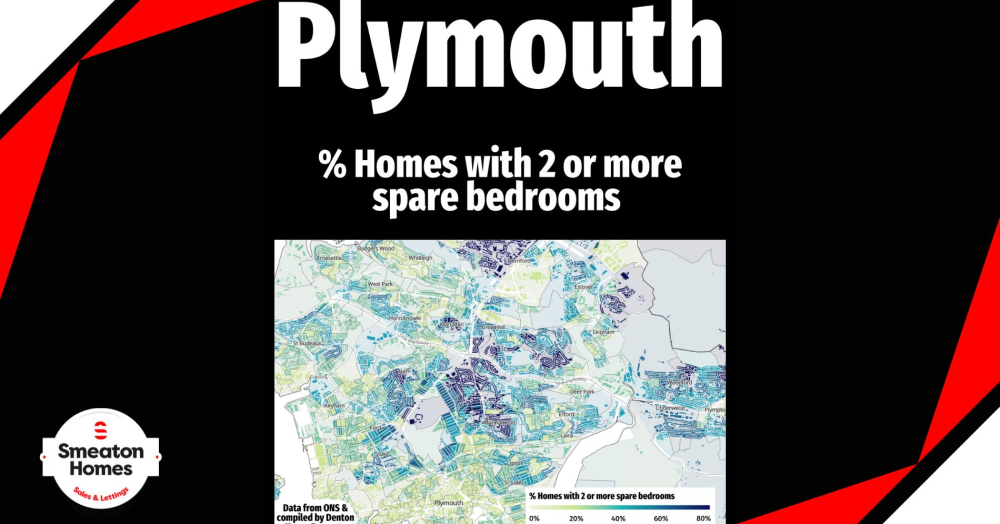
Plymouth Spare ‘Spare’ Bedrooms
There is something very British about holding on to spare bedrooms. Many households in Plymouth have one, but a sizeable number have two or even three that sit untouched most of the year.
The map reveals pockets of the town where large proportions of homes have significant unused space, especially in the darker shaded areas.
Is that a good thing?
Well, yes and no.
On one hand, extra bedrooms offer flexibility. Visiting children or grandchildren have somewhere to sleep. There is space to work from home, run a hobby, or simply store possessions gathered over a lifetime. People worked hard to buy these homes, and it is entirely understandable that they enjoy them.
Yet there is another side. Spare bedrooms cost money. They require heating, maintenance, and insurance. Many owners are effectively paying for rooms that bring little benefit. Some tell us they feel tied to the house when the space no longer holds meaning. Others are living in homes that no longer match their stage of life, but the thought of moving feels overwhelming.
There is also a wider question. When Plymouth households sit in properties larger than they need, younger families can struggle to find room to grow. Many would gratefully take on space that currently sits idle.
There is no right answer. Keeping spare bedrooms is often emotional rather than logical. However, if those rooms have become dusty museums rather than useful spaces, it might be time to consider whether the home still fits.
If you are wondering about downsizing, planning a future move, or simply curious what your Plymouth home might be worth, we are always happy to talk it through. No pressure, no obligation. Just a sensible conversation to see whether you are living in the space you need.
Feel free to contact us at info@smeatonhomes.co.uk